German Shepherd: The Ultimate Work Dog Care Guide
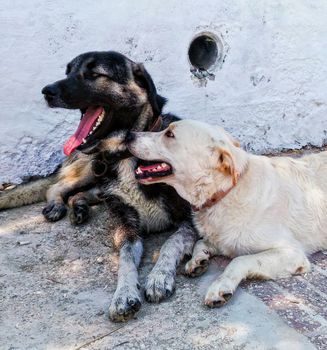
One Breed, Two Very Different Dogs
Before anything else about care: the German Shepherd you bring home determines most of what follows. The breed splits into two populations that share a standard but not a body.
Working lines — bred for police, military, and sport work — are leaner, higher-drive, quicker to arousal, and typically 5 to 10 kg lighter than their show counterparts. They need a job, and they need one young.
Show lines — bred for the stacked silhouette and the sloping back — are heavier, calmer, and more content with a household routine. They are also more likely to carry the structural problems, particularly hip and elbow dysplasia, because the breed standard itself has at times rewarded an angulation that loads the joint.
Neither is a better dog. But the care plan differs sharply, and the single most common mistake new owners make is choosing from one line and then applying the exercise and feeding pattern of the other. A working-line dog kept in a flat with two short walks a day will develop behavioural problems. A show-line dog given the conditioning programme of a sport dog will break down.
Exercise: The Phase Matters More Than the Volume
The usual advice — "one to two hours daily" — is not wrong, but it ignores the two windows where exercise decisions decide the dog's long-term soundness.
Puppy and adolescent (up to 18 months)
Growth plates in a large breed do not close until roughly 14 to 18 months. Until then, forced distance running, jumping from height, and hard-surface sprinting are the main avoidable causes of joint damage in this breed. The rule is self-paced exercise: free play, short training sessions, off-lead exploration where the puppy chooses when to stop. A useful benchmark is five minutes of structured walking per month of age, twice a day, up to about 45 minutes a session.
Adult (18 months to 7 years)
This is where the breed's exceptional work capacity can be used. A working German Shepherd benefits from a mix of:
| Modality | Purpose | Weekly guide |
|---|---|---|
| Structured walking | Baseline conditioning, joint health | 5–7 sessions, 45–60 min |
| Free running or swimming | Cardio without joint impact | 2–3 sessions |
| Obedience or scent work | Mental load — the highest-value work for this breed | Daily, 10–20 min |
| Strength work (hills, weighted harness under supervision) | Hind-end muscle, which protects hips | 2 sessions |
A German Shepherd that gets physical exercise but no problem-solving is not a satisfied dog. The mental component is not a bonus; it is the part that prevents the pacing, the light-chasing, and the reactivity.
Senior (7 years and up)
Reduce impact, keep duration. Swimming and flat walking replace ball-chasing and jumping. Watch for the specific decline pattern of this breed: hind-limb weakness that begins as difficulty on stairs.
The Bloat Emergency
Gastric dilatation-volvulus is the condition most likely to kill an otherwise healthy German Shepherd, and it is the one the owner can influence most.
The risk factors are documented: a deep narrow chest, a single large meal daily, eating rapidly, drinking heavily right after eating, and vigorous activity within an hour of a meal. The breed is over-represented.
Practical prevention:
- Two or three smaller meals daily instead of one large one.
- A slow-feeder bowl for dogs that inhale their food.
- No hard exercise for one hour either side of a meal.
- Raise the bowl only if your vet advises it — the evidence on elevated feeders is mixed and some studies associate them with increased risk.
- Know the signs: a hard, distended abdomen, unproductive retching, restlessness, and drooling. This is a surgical emergency measured in minutes, not hours. Do not wait to see if it passes.
Owners of high-risk dogs sometimes discuss prophylactic gastropexy — surgically tacking the stomach to the body wall — at the time of neutering. It does not prevent bloat but prevents the torsion that makes it lethal. It is worth raising with a veterinarian.
Hip, Elbow, and Spine
Hereditary joint disease is common enough in this breed that responsible breeding is defined by screening, not by the absence of symptoms in the parents.
- Elbow and hip dysplasia — screen for these when choosing a puppy. Ask for the hip and elbow scores of both parents. A dog with normal hips from two scored parents is a far better bet than a cheap puppy with no paperwork.
- Degenerative myelopathy — a progressive spinal cord disease with no cure. A DNA test identifies carriers, which lets breeders avoid producing affected dogs. Signs begin with hind-limb incoordination and knuckling; there is no treatment that reverses it, but physiotherapy, harness support, and mobility aids meaningfully extend the dog's comfortable period.
- Panosteitis — shifting leg lameness in young dogs, self-limiting but painful. It is often mistaken for an injury.
Feeding a Working Body
A German Shepherd's diet is not exotic, but two details matter:
- Protein quality over protein percentage. A working adult does well on a complete diet with named animal protein as the first ingredient, roughly 22–26% protein. Very high protein is unnecessary for a household dog and puts extra load on the kidneys in an animal already prone to them.
- Body condition, not bowl size. You should be able to feel the ribs easily and see a waist from above. This breed is prone to both overfeeding, because it asks convincingly, and to bloat, which is worsened by large meals. Feed to condition.
Supplementation is mostly marketing. Joint supplements have modest evidence at best; a balanced diet and appropriate weight do more for joint health than any powder.
Coat, Skin, and the Double Layer
The German Shepherd carries a dense double coat that sheds continuously and blows out twice a year, usually spring and autumn.
- Brush two to three times a week, daily during a blow-out. An undercoat rake reaches the layer a slicker brush cannot.
- Do not shave. The undercoat insulates both against cold and against heat. Shaving it removes the dog's thermal regulation and increases sunburn and skin cancer risk.
- Bathe rarely — every two to three months, or when genuinely dirty. Frequent bathing strips the oils and causes the dry, itchy skin this breed is already prone to.
- Check ears weekly. The upright ear is well ventilated but still collects wax and moisture, and ear infections hide behind head-shaking that owners write off as normal.
Training and Mental Work
This is a breed that was developed to work with a handler, and its defining trait is that it wants instructions. Two principles cover most of it:
Give it a job. Scent work, obedience competition, protection sport, search and rescue, or a structured daily training session. A German Shepherd with a task is calm. Without one, the intelligence turns into vigilance.
Train with clarity, not severity. The breed is sensitive to harsh handling and responds far better to consistent, clearly-marked reinforcement. Compulsion-based methods produce a dog that complies but stops offering behaviour, which is the opposite of what the breed is for.
The Retirement Transition
A working or highly trained German Shepherd often declines fast once the job stops. The dog that spent six years on patrol does not simply become a pet; the drive remains and the outlet has gone.
Plan the wind-down over months rather than days. Replace the work with a lower-intensity equivalent — nose work, short training sessions, structured walks with a purpose. Keep the routines. The dogs that transition badly are usually the ones whose entire daily structure was removed at once.
Frequently Asked Questions
How much exercise does a German Shepherd need?
An adult needs roughly one to two hours of activity daily, but the composition matters more than the total: a mix of structured walking, free running, and — critically — ten to twenty minutes of daily mental work. Puppies under eighteen months should not be given forced distance running or jumping, because the growth plates are still open.
Are German Shepherds prone to hip dysplasia?
Yes. Hip and elbow dysplasia are among the breed's most common hereditary problems, which is why responsible breeding is defined by joint screening rather than by the parents appearing healthy. Always ask for the hip and elbow scores of both parents before buying a puppy.
What is bloat and why is it dangerous for this breed?
Gastric dilatation-volvulus is a sudden swelling and twisting of the stomach. Deep-chested breeds like the German Shepherd are over-represented. Signs are a hard distended abdomen, unproductive retching, drooling, and restlessness, and it is fatal within hours without surgery. Feed two or three smaller meals daily, use a slow-feeder bowl, and avoid hard exercise for an hour either side of eating.
Should I shave my German Shepherd in summer?
No. The double coat insulates against heat as well as cold, and removing it impairs the dog's ability to regulate temperature while exposing skin to sunburn. Brush out the undercoat instead — that is what actually improves airflow to the skin.
Are German Shepherds good with children?
With correct breeding, early socialisation, and training, most are. The breed's protective instinct and herding drive mean that supervision around young children and clear rules for the dog's space matter more than with a low-drive companion breed. Temperament is also strongly line-dependent: show lines are generally more tolerant than working lines.
How long do German Shepherds live?
Typically nine to thirteen years, with ten to eleven being common. The most frequent serious health issues affecting lifespan in the breed are gastric torsion, degenerative myelopathy, and hip or elbow disease, along with the cancers common to large breeds.